

The concept similar to Artificial Intelligence, in the form of “Artificial humans” started in early 1900. However, the interest in intelligence of machines started in 1950, with Alan Mathison Turing published a work “Computer Machinery and Intelligence” while working at the University of Manchester, which eventually became The Turing Test. The Turing test, originally called the imitation game is a test of a machine’s ability to exhibit intelligent behaviour equivalent to, or indistinguishable from, that of a human. From there onwards slowly the term “artificial intelligence” gained momentum and acceptance a research domain.
The current surge in common-use AI tools including virtual assistants, search engines, Chatbots with LLM etc. started from year 2012, with researches initiated by technology giants including FAANG (Facebook, Amazon, Apple, Netflix, and Google) and major reputed research institutions. The popularisation of Deep Learning and Big Data also commenced in the same period.
Artificial intelligence is a specialisation within the Computer science domain, concentrates on creating systems which has an ability to replicate human intelligence and problem-solving abilities and beyond. AI systems utilises immense data and its processing along with past learning to streamline and improve itself in its current and future activities. Self-learning and self-healing are key attributes which helps AI system to be effective and relevant. With self-healing capabilities, AI system autonomously detects, diagnoses, and addresses its operational flaws.
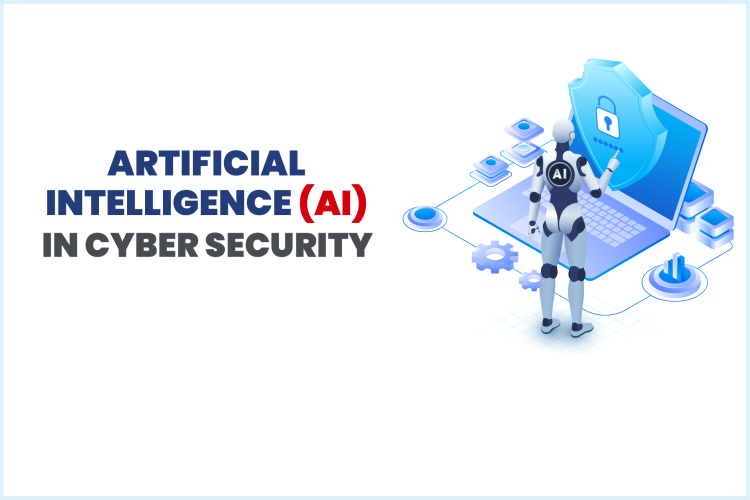
In the Cyber Security domain, Artificial Intelligence has emerged as a super power transforming the way organisations defends themselves against evolving cyber threats. AI helps in cybersecurity in three major ways or stages to include threat detection, threat prediction, and response. The capability of Artificial intelligence/machine learning technologies provides analysis of enormous data in a very short time unachievable by any human analyst brains, there by facilitates early detection of any anomalies and potential threats. AI driven tools can act themselves in an autonomous manner, responding to attacks in real-time, eradicating the risks and minimises the impact of any breaches. AI can learn the behaviour and detect anomalies in case of any change in the behaviour, leading to a possible cyber threat. These techniques are employed in UEBA (User and entity behavioral analysis) . UEBA is security solution that uses behavioral analytics and machine learning to identify abnormal and potentially dangerous user and device behavior. In the response side, AI based tools may be configured with play-books for autonomous responses for any breaches.
On the flip side, the bad actors also started employing sophisticated AI tools to create targeted Cyber-attacks on victims. The collection of data and comprehensive analysis used to plan the attack, by understanding the vulnerabilities in the target network/configuration. Cyber criminals can also potentially use adversarial methods to deceive the target systems and evade detection. As the organisational security grows with synergy from Artificial Intelligence, hackers also grow in the similar manner with learning capabilities.
With these observations, the complete reliance on AI and its autonomy may lead to loopholes in the system. Also, an oversight by a capable analyst on the detection, prediction and response capabilities and configuration of AI tools is a necessity. It essential that organisations shall have a balance, combining the capabilities of Artificial Intelligence with human expertise to constitute a comprehensive Cyber defense strategy that can address fast changing nature of Cyber threats.
-by Jyothish Jolisa
VP (Information Security) & CISO